


.png)

 ( 母液浓度为 40 mg/mL ), 如您需要配置的浓度超过该产品的溶解度,请先与我们客服联系。
包装规格:
20mg in glass bottle
产品简介:
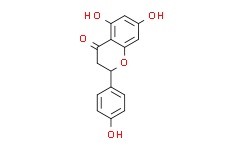
一种葡萄柚中常见的黄酮类化合物,具有抗氧化、自由基清除剂、抗炎化合物、碳水化合物代谢促进剂和免疫系统调节剂的作用。
Naringenin is a flavonoid commonly found in grapefruits which functions as an antioxidant, free radical scavenger, anti-inflammatory compound, carbohydrate metabolism promoter, and immune system modulator. Studies indicate that in vitro Naringenin reduces oxidative damage to DNA. In addition, Naringenin potently inhibits the secretion of very-low-density lipoproteins by cells. Furthermore, Naringenin has been shown to reduce cholesterol concentrations in hepatocytes and plasma cells via inhibiting HMGCR (HMG-CoA reductase). Studies conducted on Hepatitis C virus particles demonstrate that Naringenin can inhibit the virus via a PPAR-mediated mechanism by inhibiting the long term assembly of the virus.
溶解性:
熔点:247-250°C (lit.) 溶于乙醚、甲醇、乙醇和DMSO,不溶于水。
储备液保存:
-80°C, 6 months
-20°C, 1 month
-20°C, 1 month
体内实验:
1、请依序添加每种溶剂: 10% DMSO→40% PEG300→5% Tween-80→45% saline
Solubility: ≥ 3 mg/mL (11.02 mM); Clear solution
此方案可获得 ≥ 3 mg/mL (11.02 mM,饱和度未知) 的澄清溶液。
以 1 mL 工作液为例,取 100 μL 30.0 mg/mL 的澄清 DMSO 储备液加到 400 μL PEG300 中,混合均匀;向上述体系中加入50 μL Tween-80,混合均匀;然后继续加入 450 μL生理盐水定容至 1 mL。
2、请依序添加每种溶剂: 10% DMSO→90% (20% SBE-β-CD in saline)
Solubility: ≥ 3 mg/mL (11.02 mM); Clear solution
此方案可获得 ≥ 3 mg/mL (11.02 mM,饱和度未知) 的澄清溶液。
以 1 mL 工作液为例,取 100 μL 30.0 mg/mL 的澄清 DMSO 储备液加到 900 μL 20% 的 SBE-β-CD 生理盐水水溶液中,混合均匀。
3、请依序添加每种溶剂: 10% DMSO→90% corn oil
Solubility: ≥ 3 mg/mL (11.02 mM); Clear solution
此方案可获得 ≥ 3 mg/mL (11.02 mM,饱和度未知) 的澄清溶液,此方案不适用于实验周期在半个月以上的实验。
以 1 mL 工作液为例,取 100 μL 30.0 mg/mL 的澄清 DMSO 储备液加到 900 μL玉米油中,混合均匀。
<1mg/ml表示微溶或不溶。
普西唐提供的所有化合物浓度为内部测试所得,实际溶液度可能与公布值有所偏差,属于正常的批间细微差异现象。
请根据产品在不同溶剂中的溶解度选择合适的溶剂配制储备液;⼀旦配成溶液,请分装保存,避免反复冻融造成的产品失效。
Solubility: ≥ 3 mg/mL (11.02 mM); Clear solution
此方案可获得 ≥ 3 mg/mL (11.02 mM,饱和度未知) 的澄清溶液。
以 1 mL 工作液为例,取 100 μL 30.0 mg/mL 的澄清 DMSO 储备液加到 400 μL PEG300 中,混合均匀;向上述体系中加入50 μL Tween-80,混合均匀;然后继续加入 450 μL生理盐水定容至 1 mL。
2、请依序添加每种溶剂: 10% DMSO→90% (20% SBE-β-CD in saline)
Solubility: ≥ 3 mg/mL (11.02 mM); Clear solution
此方案可获得 ≥ 3 mg/mL (11.02 mM,饱和度未知) 的澄清溶液。
以 1 mL 工作液为例,取 100 μL 30.0 mg/mL 的澄清 DMSO 储备液加到 900 μL 20% 的 SBE-β-CD 生理盐水水溶液中,混合均匀。
3、请依序添加每种溶剂: 10% DMSO→90% corn oil
Solubility: ≥ 3 mg/mL (11.02 mM); Clear solution
此方案可获得 ≥ 3 mg/mL (11.02 mM,饱和度未知) 的澄清溶液,此方案不适用于实验周期在半个月以上的实验。
以 1 mL 工作液为例,取 100 μL 30.0 mg/mL 的澄清 DMSO 储备液加到 900 μL玉米油中,混合均匀。
<1mg/ml表示微溶或不溶。
普西唐提供的所有化合物浓度为内部测试所得,实际溶液度可能与公布值有所偏差,属于正常的批间细微差异现象。
请根据产品在不同溶剂中的溶解度选择合适的溶剂配制储备液;⼀旦配成溶液,请分装保存,避免反复冻融造成的产品失效。
体外研究:
Naringenin is shown to inhibit the proliferation of HepG2 cells resulted partly from an accumulation of cells in the G0/G1 and G2/M phase of the cell cycle. Naringenin has been shown to induce apoptosis as evidenced by nuclei damage and increased proportion of apoptotic cells. Naringenin triggers the mitochondrial-mediated apoptosis pathway as shown by an increased ratio of Bax/Bcl-2, subsequent release of cytochrome C, and sequential activation of caspase-3. Naringenin exposure significantly reduces the cell viability of A431 cells with a concomitant increase in nuclear condensation and DNA fragmentation in a dose dependent manner. Cell cycle study shows that naringenin induced cell cycle arrest in G0/G1 phase of cell cycle and caspase-3 analysis reveal a dose dependent increment in caspase-3 activity which leads to cell apoptosis.
体内研究:
Naringenin supplementation causes a significant reduction in the amount of total triglyceride and cholesterol in plasma and liver. In addition, naringenin supplementation lowers adiposity and triglyceride contents in parametrial adipose tissue. Naringenin-fed animals show a significant increase in PPARα protein expression in the liver. The expression of CPT-1 and UCP2, known to be regulated by PPARα, is markedly enhanced by naringenin treatment. Naringenin increases hepatic fatty acid oxidation through a PPARγ coactivator 1α/PPARα-mediated transcription program. It prevents sterol regulatory element-binding protein 1c–mediated lipogenesis in both liver and muscle by reducing fasting hyperinsulinemia. Naringenin decreases hepatic cholesterol and cholesterol ester synthesis. Naringenin inhibits TNF-α-induced VSMC proliferation and migration in a dose-dependent manner. Mechanistic study demonstrates that naringenin prevents ERK/MAPK and Akt phosphorylation while left p38 MAPK and JNK unchanged. Naringenin also blocks the increase of ROS generation induced by TNF-α.
保存条件:
-20℃
注意事项:
1、为了您的安全和健康,请穿实验服并戴一次性手套操作。
2、以上信息仅做参考交流之用。
2、以上信息仅做参考交流之用。
UN码:
HazardClass:
危害声明:
安全说明:
本计算器可帮助您计算出特定溶液中溶质的质量、溶液浓度和体积之间的关系,公式为:
质量 (g) = 浓度 (mol/L) x 体积 (L) x 分子量 (g/mol)
摩尔浓度计算公式
用本工具协助配置特定浓度的溶液,使用的计算公式为:
开始浓度 x 开始体积 = 最终浓度 x 最终体积
稀释公式
稀释公式一般简略地表示为:C1V1 = C2V2 ( 输入 输出 )
(2).jpg)
体内配方的制备方法: 取 50μLDMSO 母液,添加 300 μLPEG300 混匀澄清,再加 50μLTween80, 混匀澄清,再加 600μLSaline/PBS/ddH2O 混匀澄清
方案所需的各种助溶剂如: DMSO , PEG300 / PEG400 , Tween 80 , SBE-β-CD , 玉米油 等, 均可点击跳转或在网站搜索购买。
母液,添加 300 μLPEG300 混匀澄清,再加 50μLTween80, 混匀澄清,再加 600μLSaline/PBS/ddH2O 混匀澄清方案所需的各种助溶剂如: DMSO , PEG300 / PEG400 , Tween 80 , SBE-β-CD , 玉米油 等, 均可点击跳转或在网站搜索购买。
以上为“动物实验计算换算器”的使用方法举例,并不是具体某个试剂的配制,请根据您的实验动物和给药方式选择适当的溶解方案。
计算结果:
工作液浓度: mg/ml;
DMSO母液配制方法: mg 药物溶于 μL DMSO溶液(母液浓度 mg/mL,
体内配方配制方法:取 μL DMSO母液,加入 μL PEG300,混匀澄清后加入μL Tween 80,混匀澄清后加入 μL Saline/PBS/ddH2O,混匀澄清。
1. 首先保证母液是澄清的;
2.
一定要按照顺序依次将溶剂加入,进行下一步操作之前必须保证上一步操作得到的是澄清的溶液,可采用涡旋、超声或水浴加热等物理方法助溶。
剂量转换
对于不同动物的给药剂量换算,您也可以参考 更多


